

Reviewed by the SEOPointz team · Last reviewed June 2026. We evaluate personalization platforms by the data they actually need, not the lift numbers they advertise. SEOPointz may earn a commission from some links; it never changes what we recommend.
Every personalization vendor will show you a slide where conversions jump after their script goes live. The honest question for a store owner isn’t “does personalization work” — it’s “will it work on my catalog, with my traffic, for a price that makes sense before the lift shows up.” AI-driven personalization tools have genuinely matured: real-time recommendations, predictive segmentation, and on-site search that adapts to each shopper are now available at almost every budget tier. But the gap between a tool that pays for itself and one that quietly drains your margin comes down to how much data you can feed it and how much of your team’s time it demands. This guide walks through what these tools really do, which type fits which store, and where the marketing claims tend to outrun reality.
What “AI personalization” actually changes on your store
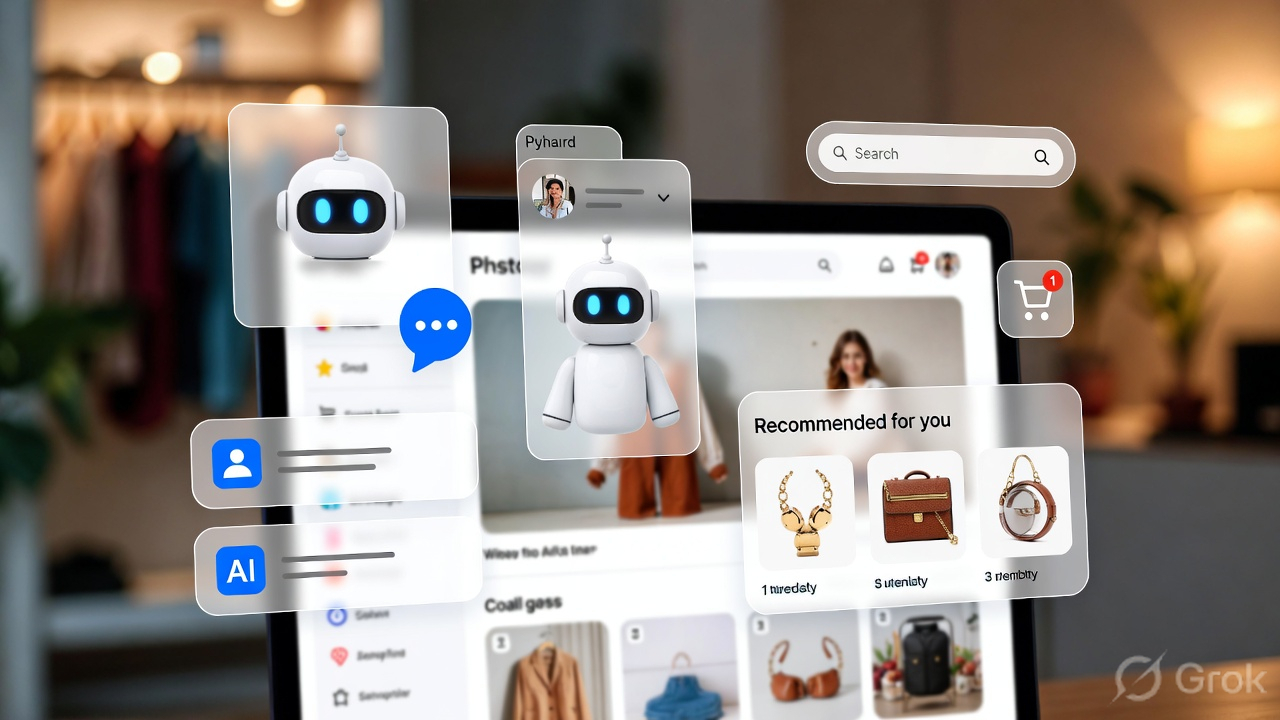
Strip away the branding and most ecommerce personalization tools do four concrete things. They recommend products (frequently-bought-together, “you might also like,” recently-viewed). They personalize on-site search and merchandising, reordering results and collection pages based on what a visitor has clicked. They segment shoppers automatically for email and SMS, predicting who is likely to churn or buy again. And they tailor content blocks — hero banners, pop-ups, and category highlights that shift by audience. The AI part is mostly pattern-matching across browsing and purchase history at a speed no merchandiser could match by hand. Amazon’s recommendation engine is the textbook example; a widely-cited McKinsey estimate has attributed roughly 35% of Amazon’s sales to recommendations, and product recommendations are commonly credited with driving a meaningful share of revenue on stores that lean on them. Your numbers won’t match Amazon’s, but the mechanism is the same.
The data problem nobody mentions in the demo
AI recommendations are only as good as the behavioral data behind them, and that is where small and mid-size stores hit a wall. A model needs a steady stream of clicks, carts, and purchases to learn meaningful patterns. If you get a few hundred sessions a day, a recommendation engine has thin signal to work with and will often fall back to generic best-sellers — which you could surface manually for free. This is the single most important filter before you buy: a store doing meaningful daily traffic and repeat purchases will see real lift; a brand-new store with a trickle of visitors usually won’t, no matter how good the algorithm is. Personalization rewards stores that already have momentum. If you’re not there yet, your money is better spent on acquisition and a clean product feed.
The three tiers of tools — and who each one is for
The market sorts cleanly into three bands. Enterprise platforms like Dynamic Yield (owned by Mastercard), Bloomreach, and Coveo offer the deepest experimentation and cross-channel control, but they require custom contracts, weeks of configuration, and usually a dedicated team. Commerce-specialist platforms like Nosto sit in the middle: built specifically for retail, covering recommendations, search, merchandising, and A/B testing, often with a success manager and a lighter implementation. App-tier tools — LimeSpot, Rebuy, and similar Shopify-native apps — install in minutes and suit smaller catalogs that mainly want upsell and cross-sell. Email-led brands running Klaviyo frequently add one of these as an on-site layer rather than replacing their stack. Match the tier to your size, not to the feature list; an enterprise tool on a small store is mostly paying for capabilities you’ll never switch on.
Comparing the main options
| Tool | Best for | Pricing model | Honest limitation |
|---|---|---|---|
| Dynamic Yield / Bloomreach / Coveo | Enterprise, multi-channel, heavy experimentation | Custom enterprise contracts | Weeks to configure; needs a dedicated team to justify |
| Nosto | Mid-market retail wanting an all-in-one commerce layer | Custom, often performance-based; not published | Opaque pricing; merchants report it costs more than app-tier rivals |
| Klaviyo (with on-site add-on) | Email/SMS-led brands adding personalization | Tiered by contact/profile count | On-site personalization usually needs a second tool layered on top |
| LimeSpot / Rebuy (Shopify apps) | Smaller catalogs focused on upsell & cross-sell | Monthly app subscription, typically starts in the low hundreds | Shallower than enterprise tools; less control over complex logic |
One caveat worth stating plainly: several leading platforms, Nosto included, don’t publish pricing and quote based on your store’s size and conversions. Budget roughly $100–300/month to start at the app tier, and expect four figures monthly once you move into specialist or enterprise territory. Always confirm the current quote with the vendor before committing — published ranges drift.
How to test before you commit
Treat any personalization tool as a hypothesis, not a purchase. Insist on a trial or a short pilot, and run it as a proper A/B test: hold out a control group that sees no personalized blocks so you can measure incremental lift, not just total revenue through the widget. Watch revenue per visitor and average order value rather than click-through on the recommendation strip alone, which is easy to inflate. Give it enough time to clear the model’s learning period — a few weeks at minimum — before you judge it. If you can’t isolate a clear lift over the control after that window, the tool isn’t earning its fee on your store, and that’s a perfectly valid result to walk away on.
Frequently asked questions
Do I need AI personalization if I already use Klaviyo for email?
Not necessarily — but they solve different problems. Klaviyo handles personalized email and SMS extremely well, while on-site personalization (recommendations, adaptive search, dynamic merchandising) happens on your store itself. Many brands run Klaviyo for messaging and add a lightweight on-site tool like LimeSpot or Nosto on top, rather than choosing one over the other.
Will personalization work on a brand-new store?
Usually not well at first. AI recommendation engines need a flow of browsing and purchase data to learn from, so very low-traffic stores tend to get generic results that don’t beat hand-picked best-sellers. Build traffic and repeat purchases first; personalization pays off once there’s real behavioral signal to work with.
How much should I budget?
App-tier Shopify tools commonly start in the low hundreds per month, while specialist and enterprise platforms move into four figures and often quote custom pricing based on your conversions. Confirm the current number directly with the vendor, since most don’t publish fixed rates.
For more on the metrics that tell you whether any of this is working, see our guide to ecommerce KPIs and the metrics that measure online success, and if you’re still choosing a platform to build on, read our comprehensive guide to building your store on Shopify.